engineer@aine:~/book/chapters$ cat 03_context-engineering-fundamentals.md
CHAPTER 03Context Engineering Fundamentals
Context engineering is the discipline underneath everything else in the book. This chapter gives you a taxonomy of what goes into a context window, how agents discover context on their own, and how to keep a long session from rotting.
- 38 sections
- 10k words
- ~46 min
- 2 figures
- 01Context is everything the model receives, not just your prompt.
- 02The context window is finite and models don't process it uniformly.
- 03Context rot accumulates across long sessions.
- 04The only mandatory context component is the user's query. Everything else is a choice.
- 05Context engineering has two failure modes: too little focus, and too much distraction.
inside this chapter
- From Prompt Engineering to Context Engineering
- Practice
- The Core Problem: Right Context, Right Time, Limited Window
- The attention problem
- The lost-in-the-middle phenomenon
- Context rot
- The human working-memory parallel
- Practice
- The right-time problem
- The two failure modes
- Mandatory and Optional Context Components
- A Taxonomy of Context Components
- System prompts
- User input and user-provided context
- Rules, style guides, and constraints
- Skills
- Tools
- Custom agents
- Environment context: runtime and metadata
- Conversation history and memory management
- Practice
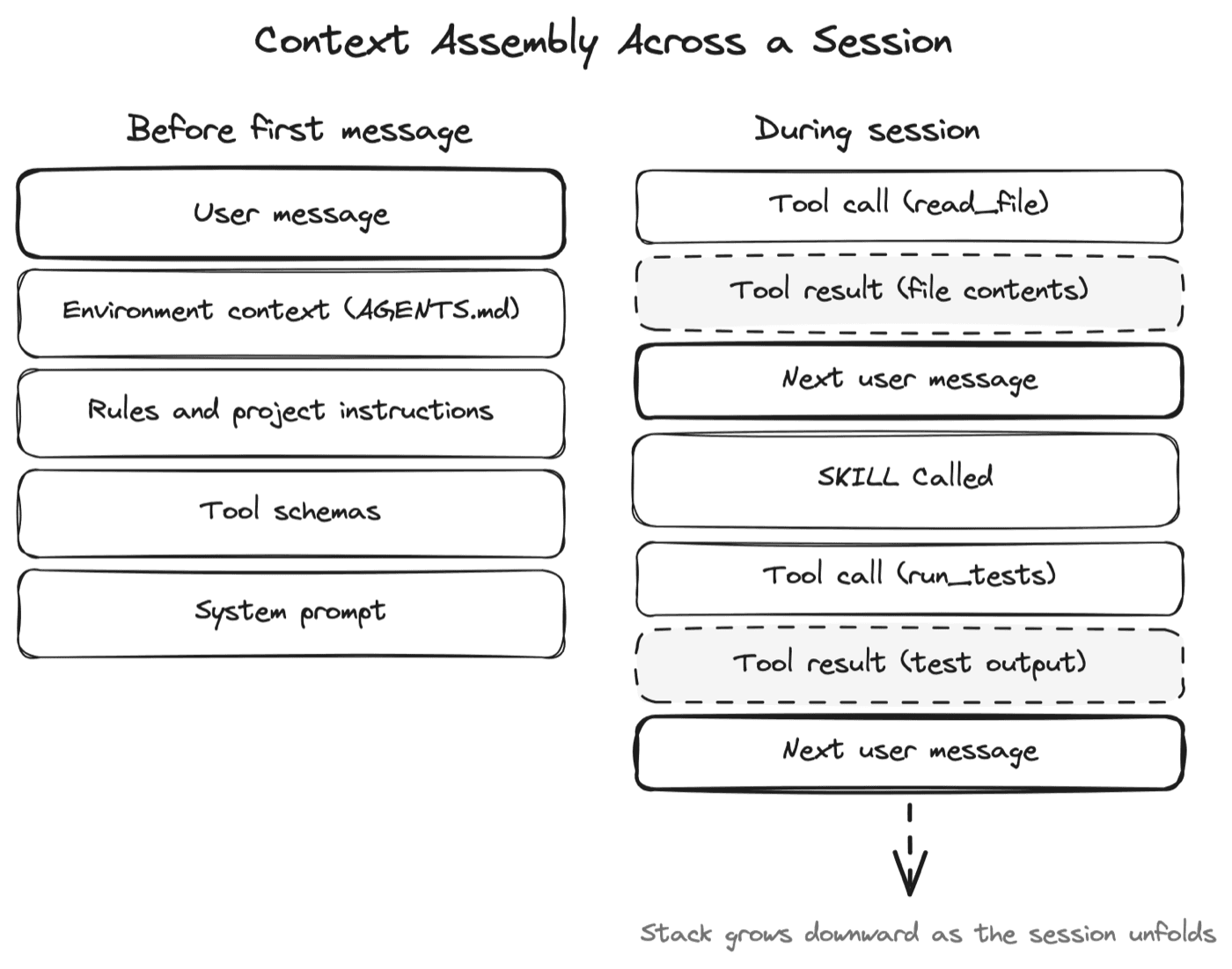
- The Context Assembly Process
- Autonomous Context Discovery: How Agents Explore Before They Write
- Code indexing and semantic search
- CLI-based exploration
- Language servers and symbolic code understanding
- What autonomous discovery does and doesn't replace
- Practice
- The Agent Runtime Pipeline: From Request to Action
- Context assembly, planning, and tool execution
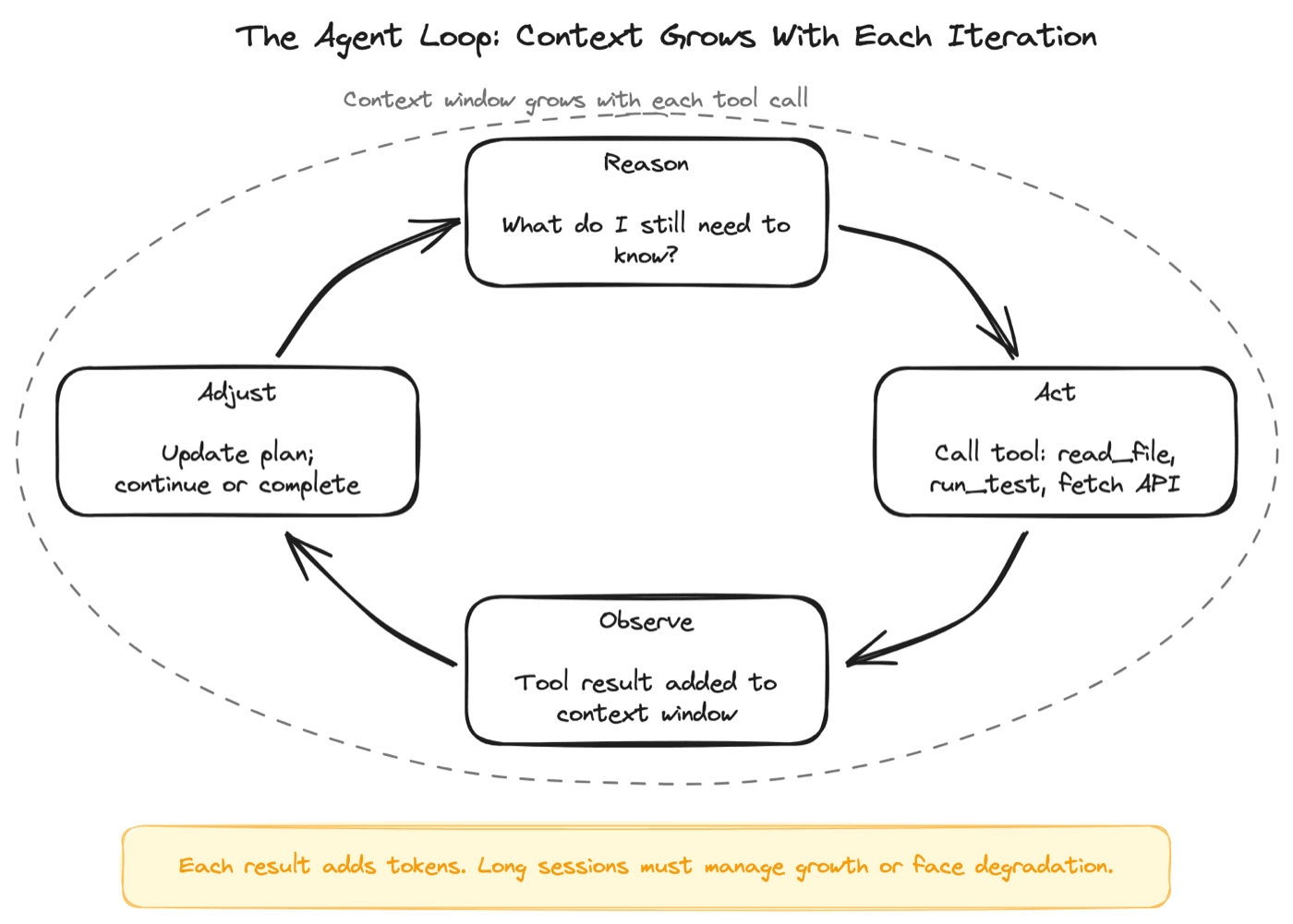
- The iterative loop: reason, act, observe, adjust
- The Golden Balance: Too Little Focus, Too Much Distraction
- Practice
- Avoiding Context Rot
- Session management
- Token efficiency for large payloads
- Practice
- Summary
figures
vocabulary introduced here
man aine →read this chapter
Chapter 3 is in the Early Release.
The code ANSE2026 gives you 30 days of free access to the O'Reilly platform, which covers this book and everything else on it.