engineer@aine:~/book/chapters$ cat 10_scaling-ai-native-engineering-in-teams.md
CHAPTER 10Scaling AI-Native Engineering in Teams
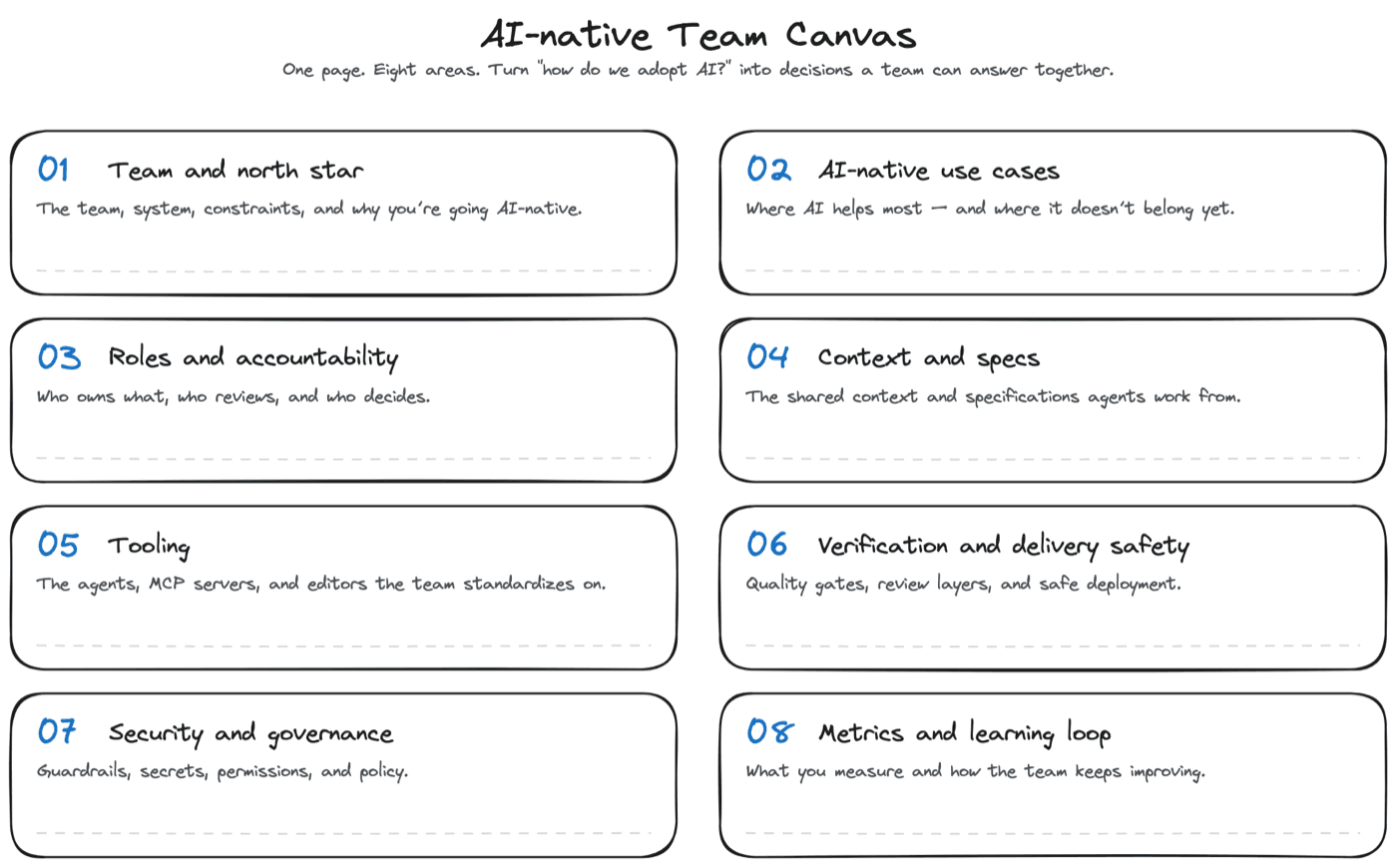
A CTO whose bill went up and whose velocity did not. This chapter is about the part no tool fixes: shared context, standardised stacks, rational resistance, the new shape of the team, and metrics that measure capability instead of activity. The canvas comes from here.
- 34 sections
- 11k words
- ~48 min
- 4 figures
- 01Scaling AI-native engineering is a people-and-standards problem, not a tooling problem.
- 02Individual gains do not add up to team gains on their own.
- 03Use the AI-Native Team Canvas to design how your team adopts AI.
- 04Treat resistance as rational and answer it with a better definition of the job.
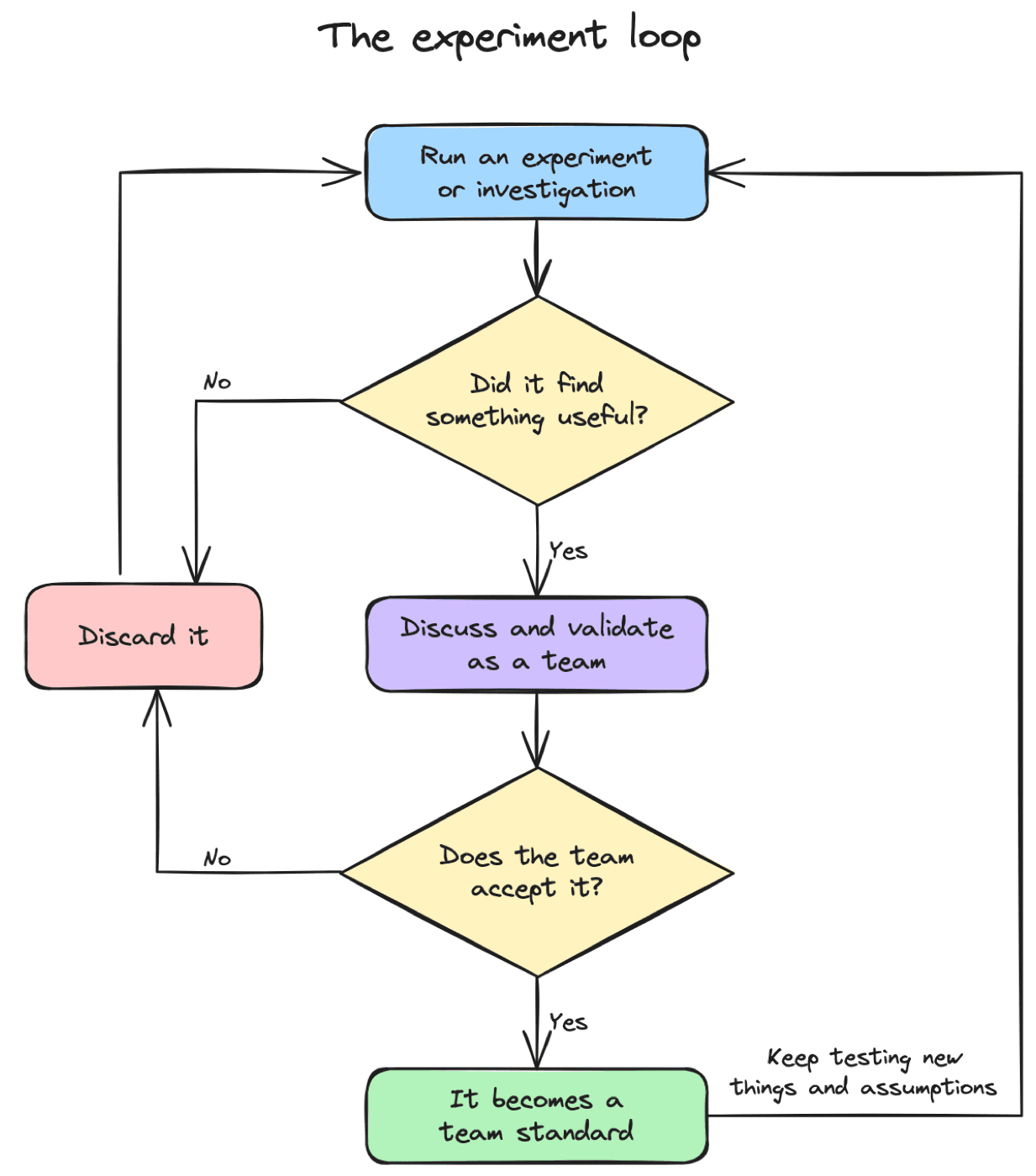
- 05Standardise the stack and sanction experimentation.
- 06The harness is the real deliverable, and it compounds.
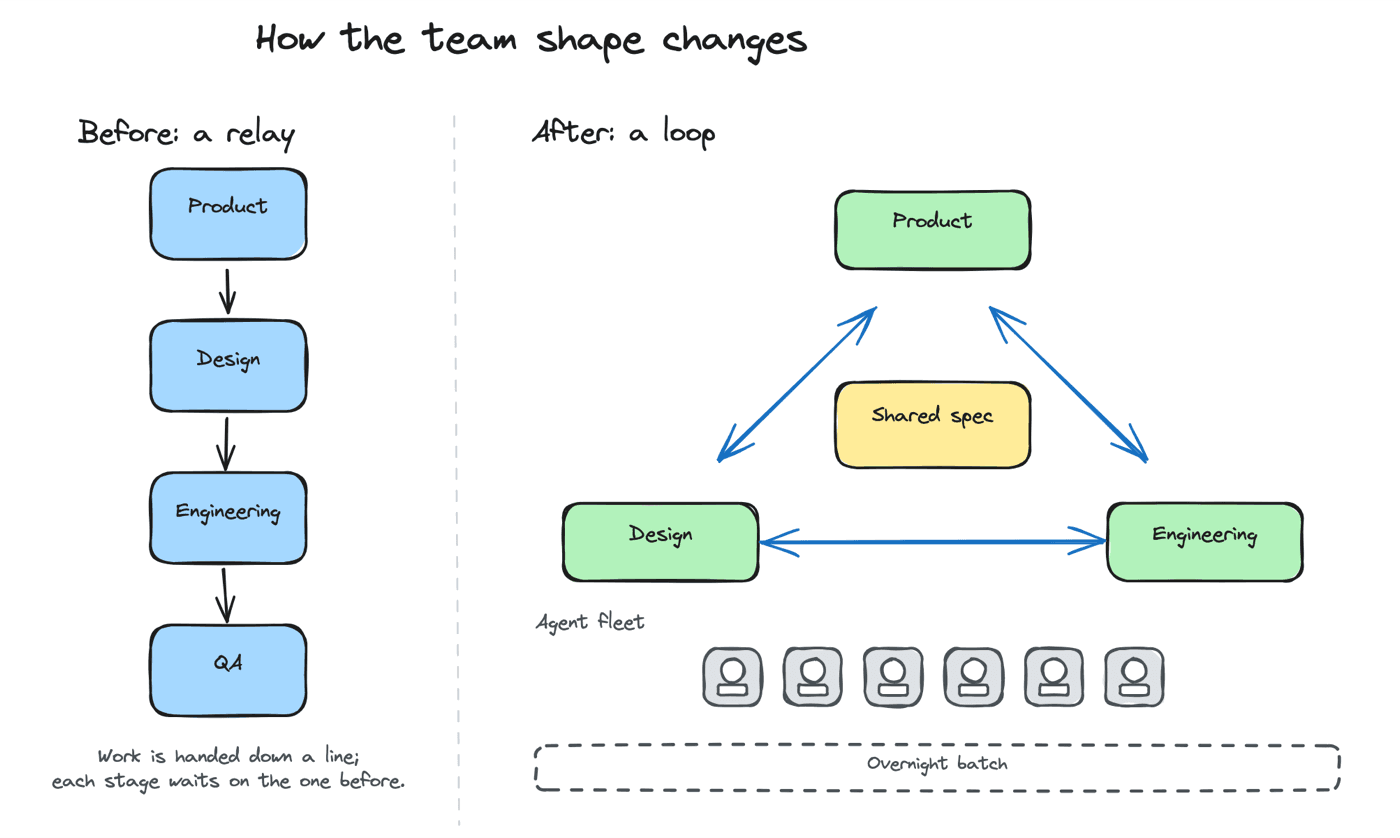
- 07The team's shape changes: smaller, tighter, with product and design closer to the code.
- 08Measure real capabilities, not vanity metrics.
inside this chapter
- Why Scaling to the Team Level Is a Different Problem
- The Bottleneck Moves, It Doesn't Disappear
- New Failure Modes That Only Show Up at Team Scale
- AI Is a Mirror and a Multiplier
- Practice
- The AI-Native Team Canvas: Design How Your Team Adopts AI
- A Business Model Canvas, but for AI Adoption
- How to Run It
- The Eight Boxes
- Skill Gaps and System Gaps
- Practice
- Usage Is Not Readiness
- Resistance Is Rational: Why Engineers Push Back
- The Three Objections You Will Hear
- Reframing the Craft
- What This Means for Leaders
- Practice
- Standardize the Team Stack
- Standardize What Matters
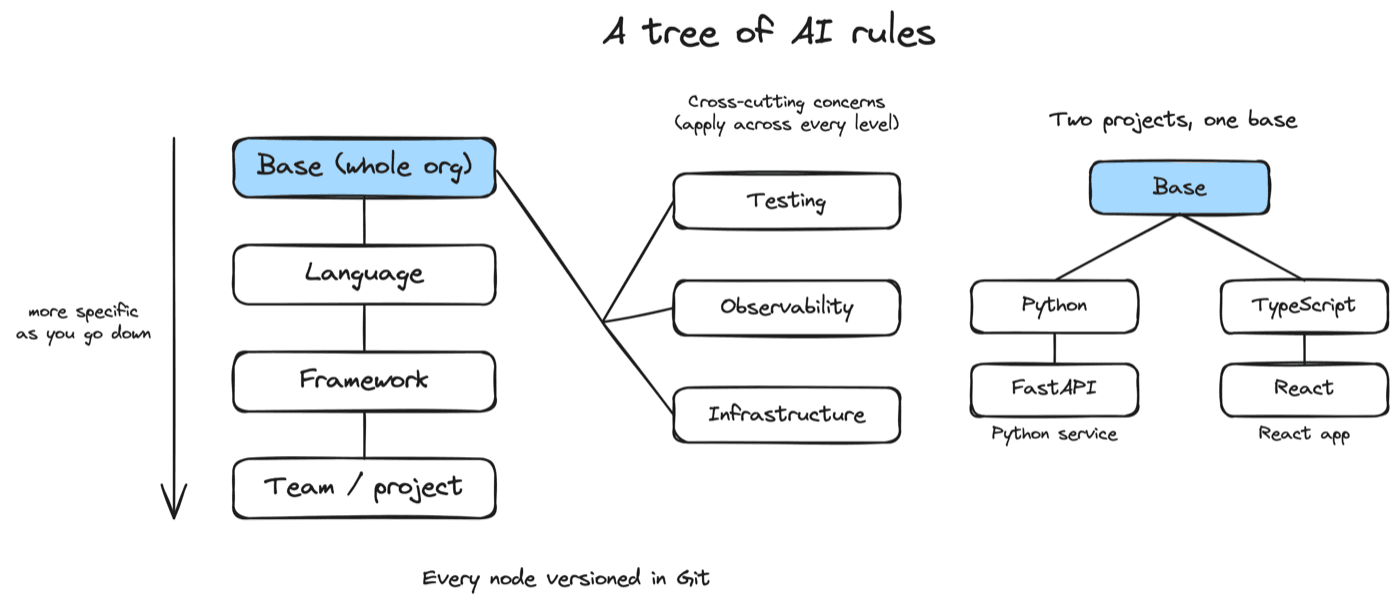
- The Shared Context Is the Real Stack
- The Harness Gets Better Over Time
- Someone Has to Own It
- Leave Room to Experiment
- How an AI-Native Team Works
- Pair on the Agent, Not Just the Code
- Write and Review Specs as a Team
- The Team Gets Smaller and Tighter
- The Human Cost of Running a Fleet
- Agents That Work Overnight
- Product and Design Move Closer to the Code
- Practice
- Measuring Adoption
- Practice
- Summary
figures
vocabulary introduced here
man aine →read this chapter
Chapter 10 is in the Early Release.
The code ANSE2026 gives you 30 days of free access to the O'Reilly platform, which covers this book and everything else on it.