engineer@aine:~/book/chapters$ cat 08_verification-and-quality-gates.md
CHAPTER 08Verification and Quality Gates
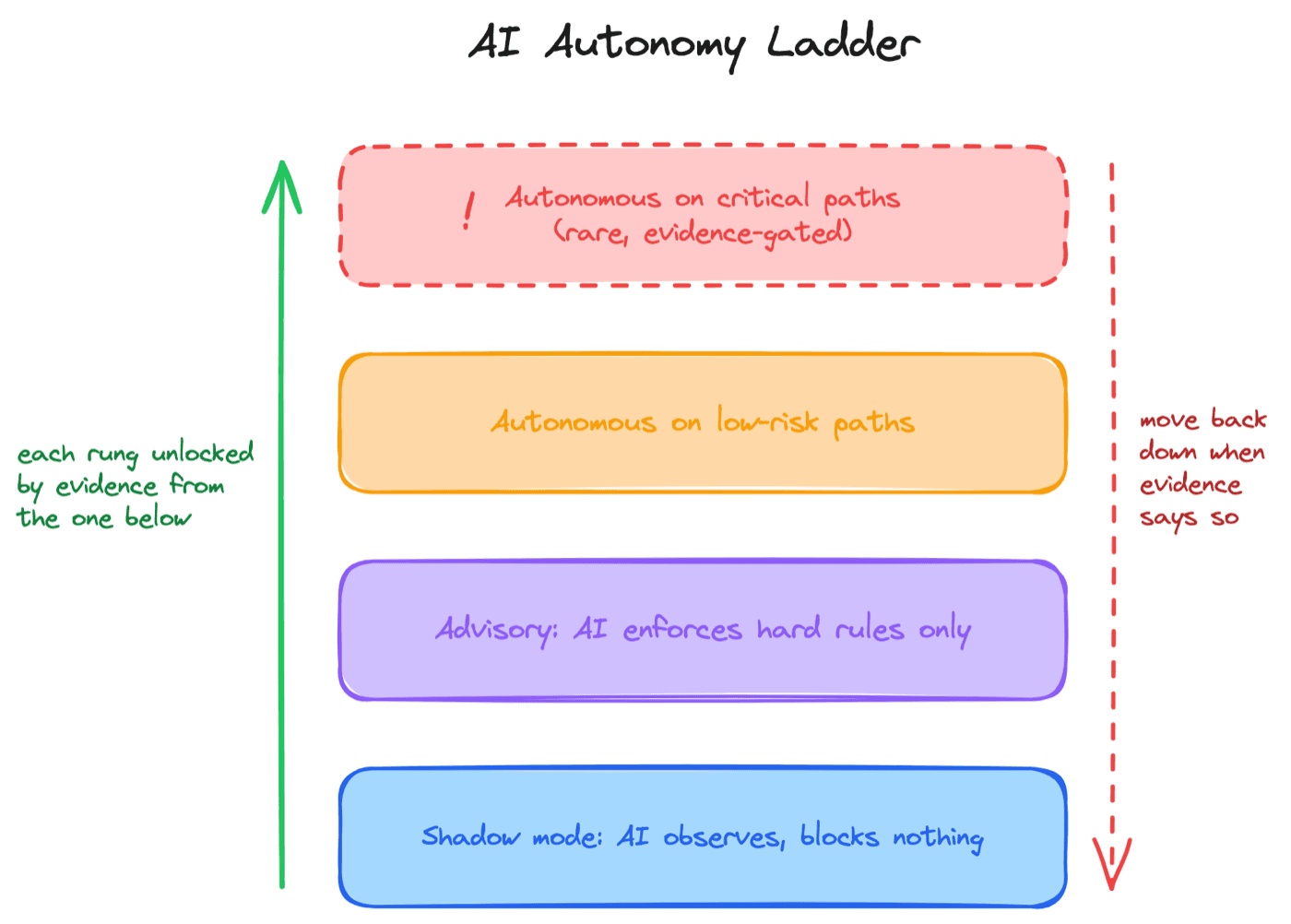
The biggest chapter in the book. Twenty-one deterministic gates, then LLM review for the judgment calls, then deployment strategies as a safety layer, then runtime and AI-powered ops. It ends with the trust ladder: how authority gets earned one reversible step at a time.
- 66 sections
- 21k words
- ~93 min
- 7 figures
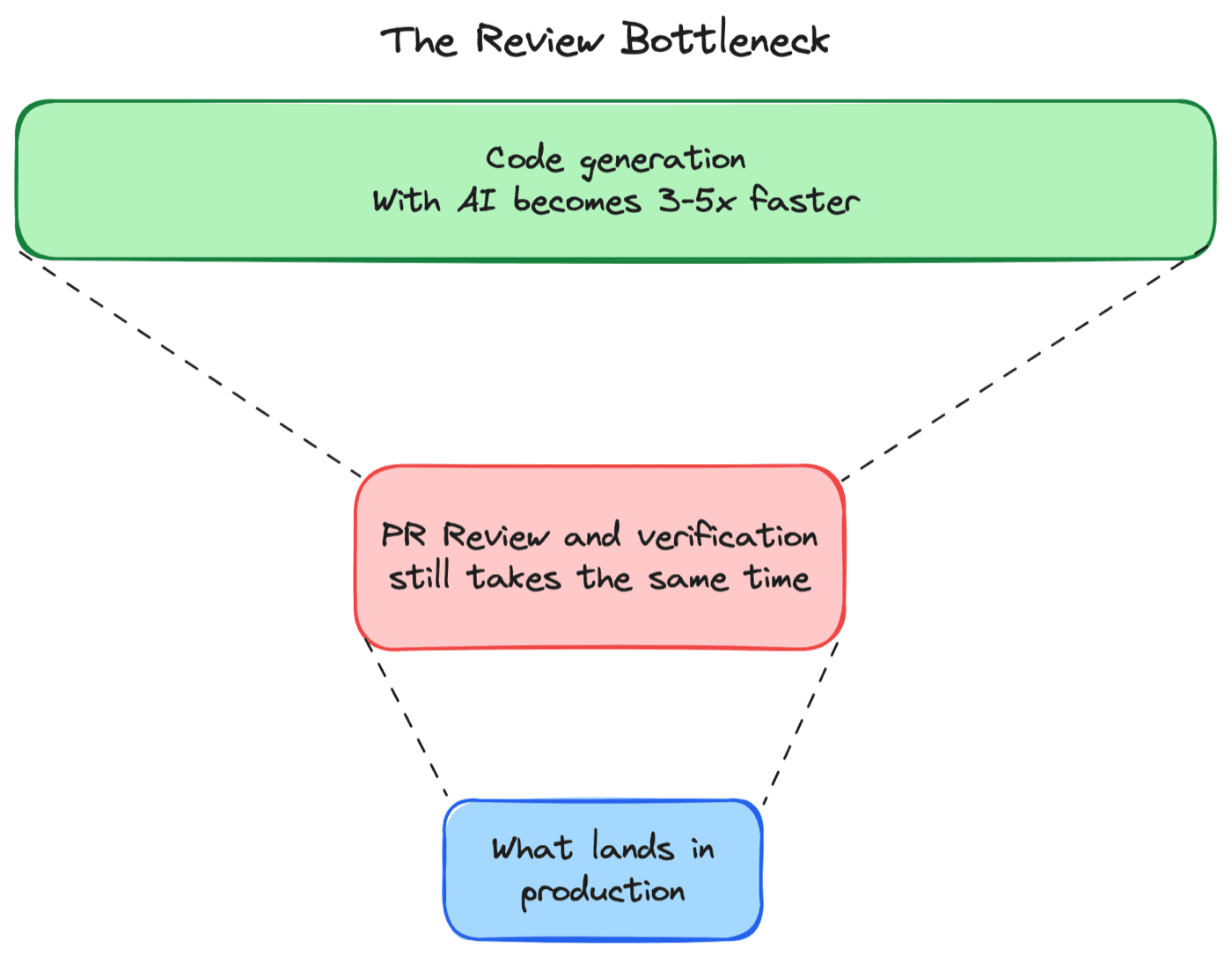
- 01The bottleneck has moved from writing code to trusting it.
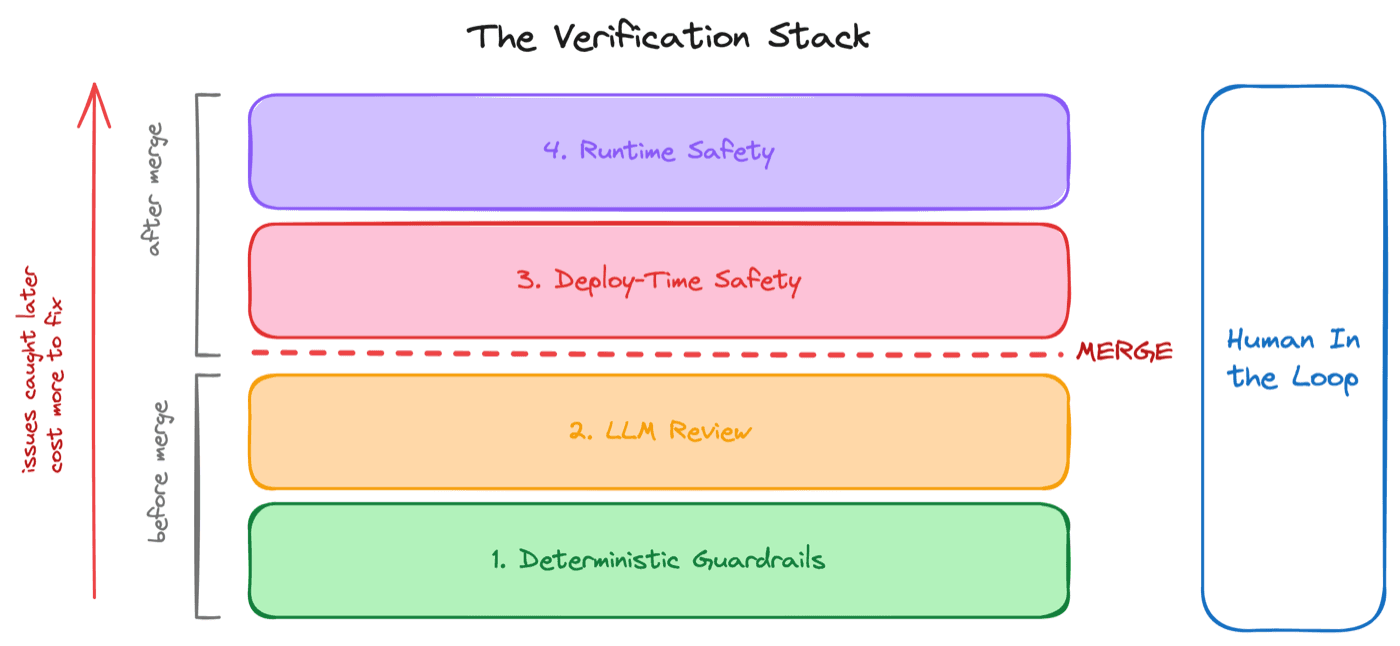
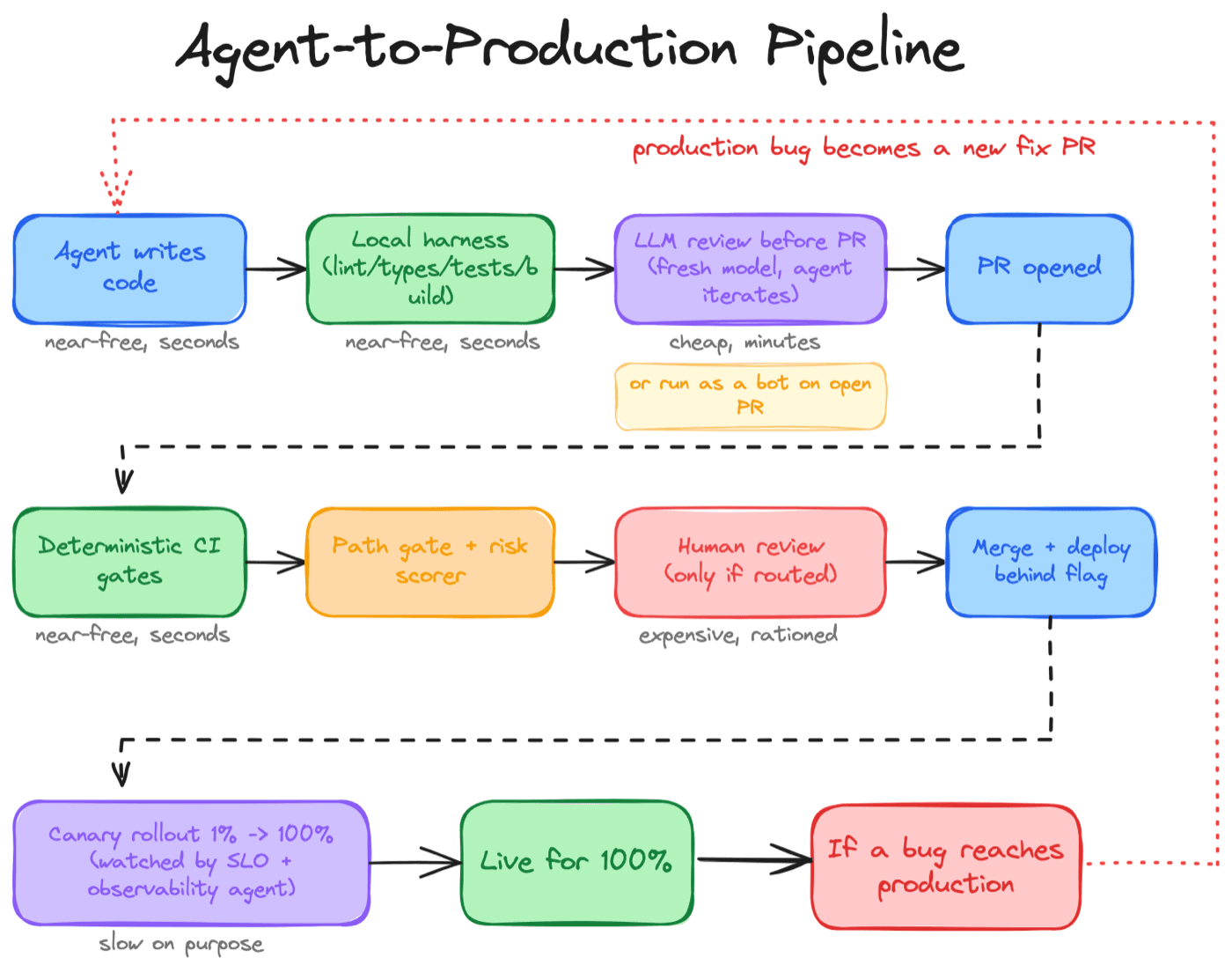
- 02Verification is a stack of four automated layers, with a human directing the whole thing.
- 03Deterministic gates are the floor, and they should run on everything first.
- 04LLM review covers the judgment calls deterministic checks can't make.
- 05After merge, the deployment itself becomes a safety layer.
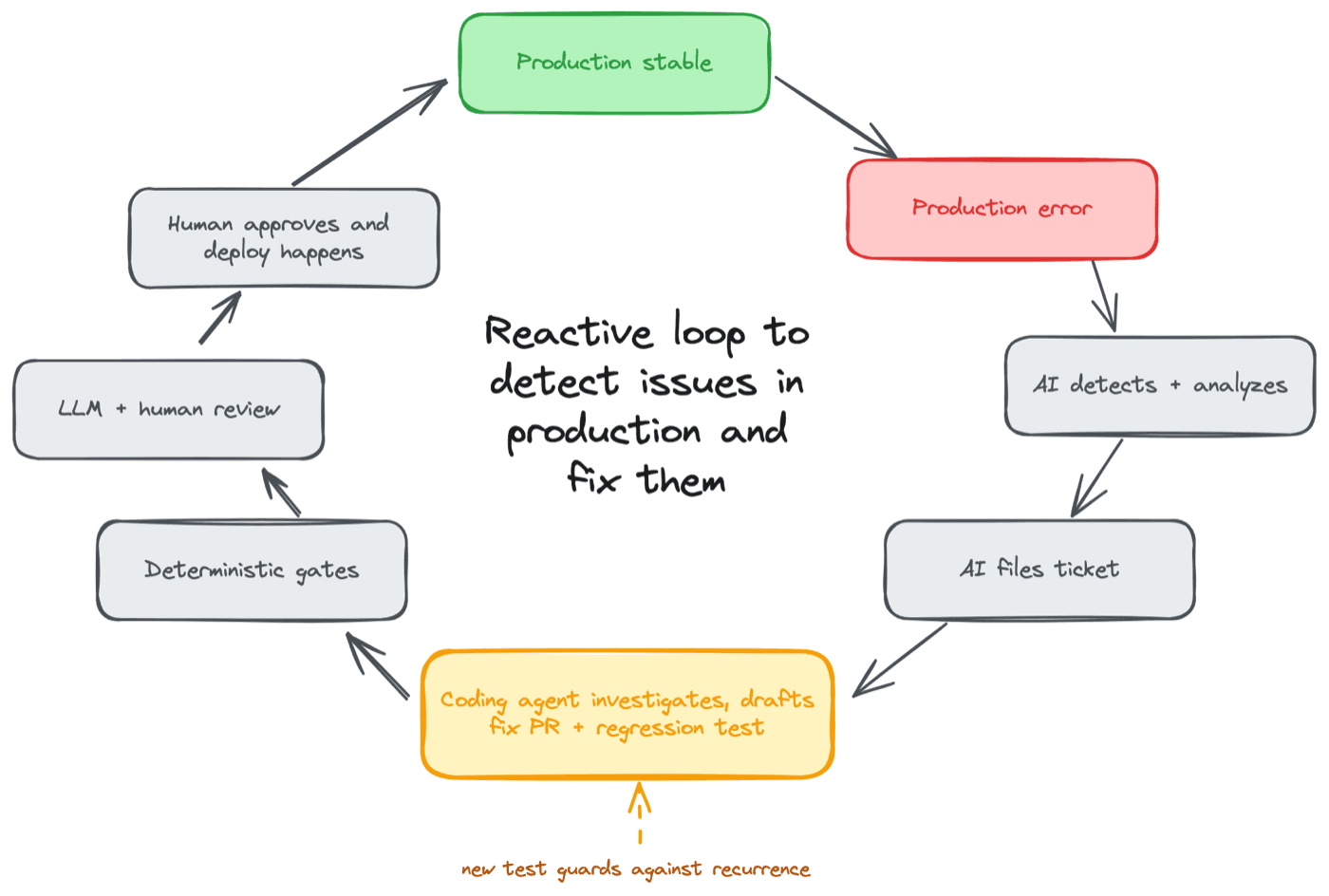
- 06Observability is the price of admission for AIOps, and the loop closes back to the start.
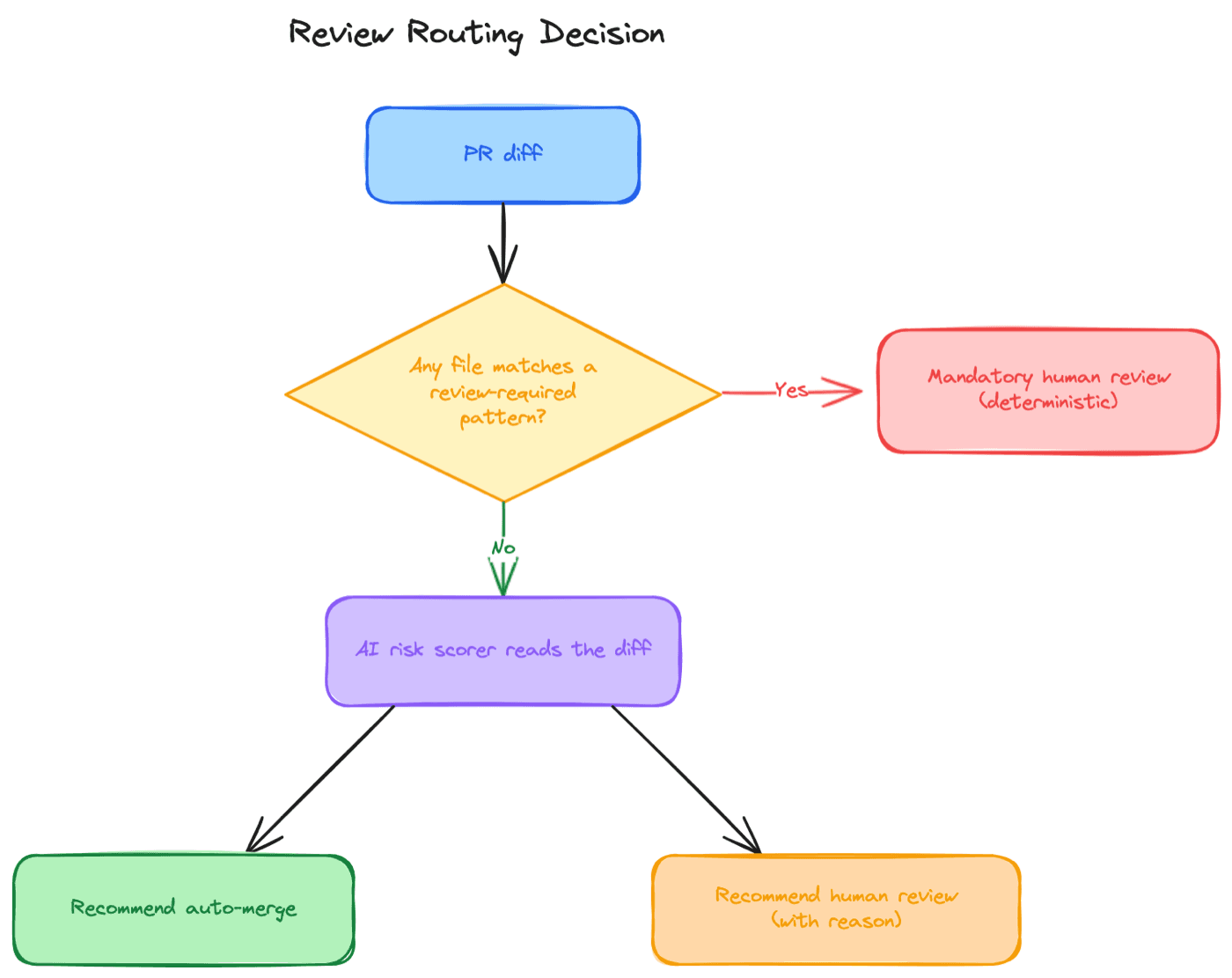
- 07Two simple mechanisms decide when a human is pulled in: a path gate, then a risk scorer.
inside this chapter
- The Bottleneck Moves
- Why Manual Review Doesn't Scale
- What This Chapter Promises
- The Two Big Questions
- Harness Validations and Self-Check Loops
- Before Merge, Layer 1: Deterministic Guardrails
- Linting and Formatting as a Baseline
- Dead Code and Unused Dependencies
- Type Checks and Compilation
- The Test Suite
- Mutation Testing as a Test Quality Gate
- Property-Based Testing for Invariants
- Static Application Security Testing (SAST)
- Dependency and Container Scanning
- Secrets Scanning
- Infrastructure as Code Scanning
- Supply-Chain Integrity
- Architecture Fitness Functions
- Performance and Bundle Budgets
- Query and Data-Access Performance
- Dependency Updates
- Contract Gates: API and Schema Breakage
- Accessibility and Internationalization
- Pull-Request Size and Scope Discipline
- Before Merge, Layer 2: LLM-Based Review
- Why Deterministic Checks Are Not Enough
- Adversarial Review Before the PR
- How an LLM Reviewer Works
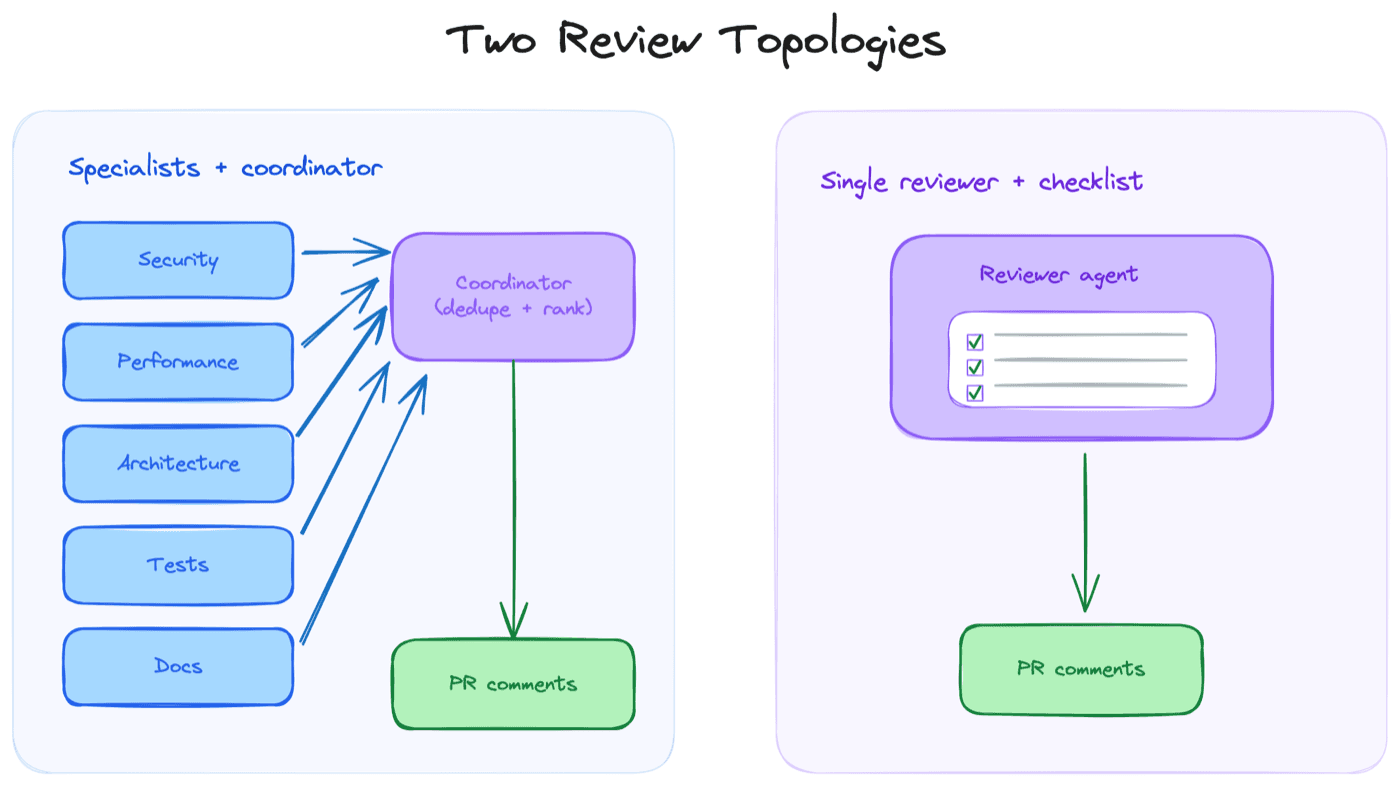
- Two Ways to Organize the Review
- What to Look For
- Tuning the Reviewer to Your Codebase
- After Merge, Layer 3: Safe Deployment Strategies
- Feature Flags as the Default
- Blue-Green Deployments
- Canary Deployments
- Shadow Traffic and Dark Launches
- Progressive Delivery by User Segment
- Automated Rollback on Error Budget Burn
- Choosing Strategies
- Data Safety
- After Merge, Layer 4: Runtime Safety and AI-Powered Ops
- The Three Pillars, Briefly
- OpenTelemetry as the Common Substrate
- SLOs and Error Budgets
- Reducing Alert Fatigue
- Where AI Changes the Game
- AI Anomaly Detection on Metrics and Logs
- Post-Deploy Observability Analysis
- AI-Driven Root-Cause Analysis
- The Bug-Resolution Pipeline
- Closing the Loop Back to the Coding Agent
- Synthetic Monitoring and Chaos Engineering
- The Human in the Loop: Deciding What Needs You
- Two Mechanisms to Decide What Needs a Human
- The Deterministic Gate: Changes That Always Need a Human
- The AI Risk Scorer
- How Human Review Is Changing
- Reviewing the Reviewer
- Putting It Together
- A Reference Pipeline, End to End
- What to Adopt First
- Metrics for the System Itself
- Failure Modes
- The Trust Ladder
- Further Reading
- Summary
figures
vocabulary introduced here
man aine →read this chapter
Chapter 8 is in the Early Release.
The code ANSE2026 gives you 30 days of free access to the O'Reilly platform, which covers this book and everything else on it.